Tuesday, July 31, 2012

Lee Anderson

Lee Anderson, Vaquero!


Horseman of the Old School
Living historian, author and superb horseman, Lee Anderson, is a student - shall we say master - of the old Vaquero “Bridle Horse” methods. He jokingly admits, “I am probably the only Swedish vaquero you’ll ever meet.”
Born in Iowa, Lee has had a life-long affection for horses. He has ridden and trained in just about every genre of horsemanship, from Western to English and from the show ring to the pasture. He can drive two, four, six and even an eight-up team hitched to a wagon! He has trained and shown in reining, pleasure and trail and also worked with dressage, hackney, jumpers…and of course, the western cow-horse. His passion however, is the “Bridle Horse.”
For those who aren’t quite sure what a “Bridle Horse” is – it refers to a horse trained in the old Vaquero methods – methods not seen much in this country for 100-plus years. A layman will recognize a bridle horse as one which eventually ends up in the use of a spade bit. Many people are taken back by the spade and automatically assume it is a harsh bit based upon its appearance. Not true. In the wrong hands, any bit is harsh. Lee quotes, “All souls criticize that which they do not understand.” A horse trained in this method responds to a feather’s touch of the reins.
In the hands of a true bridle horseman, a well-trained bridle horse is pure poetry in motion. For example, it has been recorded that the old Vaqueros were big sportsman and loved to show off at festive occasions. One such game played went something like this: A hair was plucked from the horse’s tail and the “breakaway” in the reins was replaced with said tail hair. This meant if you pulled any harder than necessary to break the hair, your reins broke. The horse was then blindfolded and put through a series of intricate moves, showing its pure trust in the rider. For the finale, horse and rider ran full-tilt, straight at a solid wall. The team stopping closest to the wall, without hitting the wall or breaking the “breakaway hair” was the winner and the Vaquero considered a top horseman. (Before criticizing a contest such as this, keep in mind it was a different time, place and culture.)
When asked why old methods such as these are fading, Lee responds, “In today’s day and age, not many are willing to spend half a lifetime learning the proper methods of horsemanship so they can spend four or five years training a horse this way.” Lee is passionate about it however and says, “It’s like driving a high performance sports car. Whatever you want is there…and at a touch.
To a learned master such as Lee, he realizes every piece of the horseman and horse’s gear work intricately together to achieve an eventual result with the slightest of effort. He says, “The spade is a bit of signals. When properly used, a horse receives signals long before he ever feels the bit and responds before the bit is ever actually used.” Each piece of the tack and gear are a part of that signal system, not to mention the rider himself. Lee can pull the bridle off his horse and preform intricate maneuvers using nothing more than body language. Anderson uses a piece of string as a “breakaway” in his reins every day. Much like the old Vaqueros and their horsehair, if he uses more than just a slight tap of pressure on the reins, they break!
After many years of being fascinated with horses, Lee chose to concentrate on this old style of horsemanship because he felt it most in tune with the horse. After a lifetime of studying what makes a horse tick, Anderson has even written a book on the subject. Developing the Art of Equine Communications is all about how to communicate with your horse, from a horse’s understanding and point of view. In Lee’s opinion, the bridle horse style of horsemanship comes closest to that.
He studied horses and how they react to certain situations for over half a century. He noticed that most times, communications with a horse are approached from a human point of view, yet a horse can only understand things from a horse’s viewpoint. Lee has made it his life’s work to understand more from the horse’s view.
Lee has been known to spend hours sitting in a pasture full of horses just watching them. He studies their moves with each other in natural surroundings - how they interact together. Most people know, by nature, a horse is a “prey” animal, but few think of that when dealing with a horse. Man is, by nature, a predator and horses are easily scared of them. Lee is probably one of the best modern-day trainers who understands the philosophy of a horse, from the horse’s perspective. He felt compelled to write Developing the Art of Equine Communications to clear up some of the myths and misinformation out there.
The Bow
As a historian, Lee does a presentation called Four Hundred Years of Southwest Cowboys. He does this in any one of three different outfits: A 1750 Spanish Colonial Caballero, an 1850 Mexican Vaquero or an 1890 American Cowboy. For each look, he has all of the period correct clothing and gear for rider and horse. The outfit may change depending upon what the situation calls for, but the historical presentation is tailored to fit what the client asks for. Lee goes over the evolution of the cowboy from its origins, beginning with the Spanish Hacendado (rancher) of the mid-1500s up through today. The first brand laws were recorded in New Spain (now Mexico) in 1529 and Lee is well versed in the history of the Vaquero - Cowboy from then through today.
Lee says, “We must include the Spanish origins in the history of the cowboy because the Vaquero was rounding up, roping, and branding cattle more than 300 years before the first American Cowboy ever threw a leg over a horse. By 1800 a highly sophisticated Vaquero culture had reached its peak in what is now the state of California. To this day, no mounted herdsman on earth has ever achieved the elegance, the presence, the beautiful equipment, the exquisite horsemanship or the sheer artistry of the everyday working Californio.”
He has spent much time and research in getting his outfits correct for each time period as well. Everything Lee puts on he and his horse is either an authentic antique piece or a reproduction from the period, made by Lee himself. He says,  “The Vaquero was a flashy dresser. He was extremely proud of his status amongst his peers. Then, due to the influence of the emerging American Cowboy culture the Mexican Vaquero lost quite a bit of the elegance and finesse of the Spanish Colonial Vaquero but he never fully accepted all of the trappings and methods of the American Cowboy culture…these things are covered at length in a presentation. The heyday of the American Cowboy only covered about 20 years… The modern image of the cowboy is loosely based on the drovers that made the three month long (cattle) drives. The cowboy most people are familiar with today is purely a Hollywood creation. However, my preference just happens to be the real cowboys… and I am well aware of the difference between ‘reel cowboys’ and ‘real cowboys.’
Besides having a life-long passion for understanding what makes a horse tick, and the history of the cowboy, Anderson is a study of human nature as well. He is extremely good-natured and has a wry sense of humor. Lee claims, “I intend to live to be 125 and not die from natural causes, but at the hands of a thirty-year-old, jealous spouse!” You gotta love a man past seventy with an attitude like that!
Jim Olson © 2012

Wednesday, June 20, 2012

Everett Bowman... Cowboy Leader


World's First Rodeo Trailer

     Everett bowman was born July 12, 1899 at Hope, New Mexico (the family actually lived near Weed) and he was a cowboy from the word go. Arguably remembered as one of rodeo’s greatest legends, this ten time World Champion Cowboy helped bring modern-day rodeo to where it’s at today.
Everett was the first president of the Cowboy Turtles Association “CTA” (the predecessor to the Professional Rodeo Cowboy Association or “PRCA”). As a matter of fact, he was one of the first organizers of the association and signed up as member (card number) fifteen; but first and foremost, he was a cowboy.
     The Bowman family moved from New Mexico to the Safford, Arizona area when Everett was about thirteen. One of his first full-time jobs away from his parents ranch was that of a cowboy with the famed “Chiricahua Cattle Company” also know back in the day as “the Cherries” or the “Three C’s” which ran cattle all up and down that rough Arizona – New Mexico border country. The foreman at the time was quoted as saying, “Everett made the best hand we ever had. It was amazing; never saw anything like it! He became a top roper, he was tougher than leather – was the strongest man I’d ever seen.”
     At the age of twenty-three, Everett and his brother Skeet, along with eight other cowboys drove a large herd of cattle from Globe, Arizona to Ely, Nevada. This may have been one of the last “old time” great cattle drives, stretching over 900 miles! When they reached Ely, after being on the trail most of the summer, the Bowman brothers decided to “stay on” and give cowboyin’ in Nevada a try. However, one cold winter in that “North Country” changed those boy’s minds. Everett said, “That country has two seasons - winter and late fall.” They cowboyed there a little over a year, then returned to Arizona, making the entire round trip a-horseback.
     Once back in Arizona, Everett (along with brother Skeet) pursued a full-time rodeo career. That turned out to be one of the best moves ever made.
     Although officially credited with ten World Championships, author (and nephew to Everett), Lewis Bowman, claims Everett won at least eleven. You see, prior to 1929, records were sketchy and, in some cases, championships were determined by winning a certain rodeo. Lewis says he may have won even more than eleven.
     Officially, Everett was a two-time World All-Around Champion, four-time Steer Wrestling Champion, three-time Calf Roping Champion and gained one Steer Roping title. He won or placed at most of the day’s biggest shows such as Madison Square Garden, Cheyenne, Calgary, Ellensburg, Prescott and Pendleton to name just a few. He even rode bucking horses till about 1928, but gave it up and stuck with the timed events saying, “Too many events and a man is no good at any of them.” The timed event end of the arena was where he shined anyhow.
     At six-foot, two-inches and 200 pounds, Everett was a physical specimen. To date, Everett is one of only three men who have won rodeos “triple crown” (three world titles in a single year) more than once.  He accomplished that feat two times. Trevor Brazile and Jim Shoulders are the only other men to do that. Bowman became known in media circles as “Rodeo’s Babe Ruth.” His fellow competitors often spoke of him as “A Cowboy’s Cowboy.” He competed in full-time rodeo competition until 1943, a period of about twenty years!
     Other advancements credited to Bowman include towing the first horse trailer on the rodeo circuit and being the first to fly to rodeos. Everett’s older brother, Dick, fashioned a hand-made wooden horse trailer in1924, which Everett and younger brother Skeet took on its maiden voyage from the home ranch in Safford, Arizona to Cheyenne, Wyoming. They put one horse in the trailer and one in the bed of the truck (as was customary then). When they arrived in Cheyenne, the Bowman boys received a lot of strange looks, but it wasn’t long till the contraption caught on. Then in 1929, Everett is credited with being the first cowboy to get the bright idea to charter a private airplane to get him to more rodeos. That idea also seems to have caught on as well. By the late 1930s, Everett bought his own plane and learned how to fly it for himself, something he did the rest of his life.
     Perhaps Everett’s biggest contribution to the sport of rodeo however was his involvement with the CTA. He served as the association’s president from its inception in 1936 until it reorganized as the Rodeo Cowboys Association (RCA) in 1945. The guy’s called themselves “Turtles” because it took them so long to get started and have a voice in rodeo business for themselves. For too many years, cowboys had been unhappy with their entry fees not being added back to the pot, the type and order of events and non-standard judging practices.
     In 1936, at Boston, all that changed when Everett and his fellow cowboys went on strike and refused to compete unless the aforementioned grievances were rectified. When the dust settled, the predecessor of the PRCA was born, and Everett was a big part of it all. It has been said, that once he got an idea formed in his head, it was hard to change. He went “toe to toe” with many rodeo committee members during his day, in the best interest of the cowboy. Many of the fundamental changes that are now the bedrock of rodeo came about under Bowman’s leadership.
     According to Lewis Bowman, “Everett Bowman (president) and brother-in-law, Hugh Bennett (secretary/treasurer) were the cogs that got the Cowboys Turtle Association into gear. The men signed up the cowboys and kicked ‘em straight (sometimes literally). Their sister wives, Lois and Josie, were the official timers and record keepers. The girls stowed the books and association’s money in the back seat of their car and kept records between rodeos.”
     Competitor, Phil Mills, said of Everett, “He did more to put the cowboy in good graces than any other man.”
     Lewis also tells of another event he witnessed as a boy, “One year at Cheyenne, this fellow and Uncle Everett got into a heated argument about having to join the association to compete in sanctioned rodeos. This fellow took a swing at Everett, who blocked the punch with one hand and landed a crushing blow at the same time with his other - knocking the guy out and breaking his nose. He then threw fifty dollars on the man’s chest and told two guys to haul him to the doctor and get him fixed up. A couple hours later, the guy returned with his nose all bandaged up. He threw twenty dollars back at Everett and said, ‘Here’s your change Bowman - Doc only charged thirty dollars. By the way, I’ll join your danged association.’ Everett smiled, handed the man back the twenty and said, ‘If your going to join, keep this and put it towards your dues.’ The two men remained good friends after that.”
     After retiring from rodeo, Everett settled on his own ranch near Wickenburg, Arizona where he spent the last parts of his life. He also worked as a sheriff there for a time. He still loved the sport of rodeo and would, “talk rodeo” with anyone who came by. Bowman judged many rodeos after retiring from competition and added “Mule Trainer” to his resume. Always the showman, he continued to make public appearances up into his sixties. At age seventy, Everett accepted a part in the movie, The Great White Hope, taking the role of a pastor.
     As a true natural athlete, he took up the sport of golf, and in his later years, became quite good at it. He even hit a hole in one at age fifty-five. Upon doing this, Bowman put down his golf clubs and retired from the sport of golf saying, “You just can’t get any better than that.” Just as with rodeo, he retired at the top.
     In 1951, Everett underwent surgery to remove a throat cancer. It lasted six hours. Rodeo stock contractor, Everett Colborn, heard about this and sent Bowman a letter which stated, “It does not surprise me your surgery took six hours, it probably took about four of that just to get through the hide.” It was done in good nature and as a testament to Bowman’s toughness.
     The sport of rodeo also loved Everett Bowman, inducting him into the ProRodeo Hall of Fame in 1979. He was also admitted to the National Cowboy and Western Heritage Museum in Oklahoma City in 1965, the first living man to be so honored. The rodeo grounds in Wickenburg are also named for their long time resident and rodeo legend. The Everett Bowman Rodeo Grounds are still in regular use to this day and the city of Wickenburg has a large bronze statue commemorating Everett.
     The “Father of Professional Rodeo,” Everett Bowman, passed in 1971 while flying his own airplane. Then PRCA president, Dale Smith, read the eulogy at Everett’s funeral and famed cowboy, Rex Allen, sang.
Everett Bowman

Jim Olson © 2012

Wednesday, May 2, 2012

Growing up Country


     You may not know it, but I grew up country. Not country like, my family tree don’t fork, kind of country. LOL! Not a house per acre in a subdivision kind of country (although there are a lot of great rural folk usually living in these areas). But a down-home, proud-to-be-an-American, from the heartland, own a pickup truck cause a car won’t make it down your road, don’t need any bureaucrat telling you what to do, raise your own food, cowboy hat wearing (to keep the sun off), raising cows, horses, chickens, goats, hogs, dogs and even cats (for chasing mice) kind of country! You know what I mean – COUNTRY!
     The half-horse town nearest to where I grew up was about two miles distant. It consisted of a Baptist church, about five homes, an old store (closed), a vacant cotton gin and a vacant feed yard. I caught the school bus there. At various times I arrived at said bus stop by means of walking, riding a bike, a-horseback or driving depending upon what was available and general weather conditions throughout the seasons.
     The next town of any significance was another ten miles and consisted of a school (K-12), three churches, a store/post office combination and about a dozen houses (this is where I went to school). I had to ride the bus for an hour, traveling from farm to ranch, in order for it to pick up enough kids to make a load. Basketball was the only sport available for boys to play because you needed five people to make up a team (one or two subs were nice) and that was about all we had in the athletics program. FFA was required curriculum. There were only about eight to ten kids in my grade each year.
     The town we considered “town” was about fifteen miles the other direction and had 12,000 inhabitants at the time. I say 12,000 because that’s what the sign at the city limits claimed – “Welcome to Portales, New Mexico. A town of 12,000 friendly people…and 3 or 4 old grouches.” People had a lot of fun with that sign, and from time to time, vandals would change the “3 or 4 old grouches” to various other sayings…but it was usually in good fun. The sign was right however, there were (and still are) a lot of friendly people in that part of the world. I think it’s because they are mostly a rural, agricultural type area. As a matter of fact, the prosperity of local business owners was tied (in one way or another) to commodity prices.
     Because of my upbringing, I gained unique and useful knowledge such as what it’s like to milk a cow, by hand, at 4:30 am, then again that evening - taught me about regularity and responsibility. I know how to butcher a chicken and pluck feathers from the warm bird, while it’s still twitching and flopping around. I know what it’s like to mend fence in 100 degree weather, assist an animal with birthing, hang wet clothes on the line in a steady wind, tromp in muck up to your knees to doctor a sick animal during a storm, get bucked off in a sticker patch, be kicked by a horse or cow protecting their “personal space,” hooked by a bull (whose “personal space” is usually much larger), how to entertain yourself without the aide of “electronic gadgets,” dress in layers so you can bear being outside in a day that starts off in the 30s at daybreak and winds up in the 80’s by afternoon, be both wind-burned and sunburned from working outside all day. I know all that and more…and I love it.
     I love it because I also know what it’s like to see mountain views ten, twenty or even fifty miles off on a clear day. I know what it’s like to stare up at the stars with an unobstructed view while hearing a cricket chirp a half-mile off on a clear, still night. I know what it’s like to have a special bond with animals - even if you plan to eat them later, the sight of a colt taking its first suckle, what it’s like to actually know your neighbors, the feeling of independence you get surviving in the country, the pride of raising your own food and yes, me being a male, the freedom to leave my house in any direction and being able to “do my business” outdoors…with worrying about whose around.
     Things weren’t always easy growing up this way. Being poor and rural, you had to be tough to survive. If you have ever chopped your own wood because it’s your only source of heat, had to gather a meal before eating it, lived in a house where you could see your breath in the un-heated bedrooms during winter, cut weeds in a farm field for minimum wage daylight till dark on a hot summer day, spent a full day in the saddle (working – not pleasure riding), had blisters on your hands, or had to choose between buying gas or groceries with your last twenty dollars because the “harvest check” is not in yet, then you know what I’m talking about.
     Growing up country taught me many things. It’s a way of life like no other and I’m glad for it. I learned things like why it’s important to respect God and country, the true value of a dollar (one you earned yourself), how to be responsible (not only for yourself but for animals and others), how to be independent, to really appreciate and respect nature, to work hard, to speak another language (Spanish), to change my own tires, fix a vehicle good enough to get back home with bailing wire and duct tape, basic veterinary skills, to be diplomatic when dealing with animals and people, horticulture and the difference between beast of burden, meat animals and pets (and know they all have their own special place in the world), the value of a friend you could count on when you really need a hand, and, well, you get the picture.
     I have a lot of fond memories of grow up this way. If you have ever “bobbed for apples” at a “ Country Jamboree,” rolled your bedroll out and slept under the stars, known the satisfaction of doing a job few others could, watched an animal being born, smelled fresh-cut hay, danced a jig in the high school gymnasium at the yearly social, seen a sunrise or sunset a-horseback with no obstructions around, eaten “rocky mountain oysters” over a branding fire or a tomato fresh off the vine, spent a Saturday night riding around in a four-wheel drive with a twelve pack and a spot light and thought it was the time of your life, listened to the same Chris Ledoux tape over and over on the way to a rodeo in the middle of nowhere, ate the best food ever at a “potluck” gathering, or if you have ever tasted home-made ice cream, made with cream you personally strained from milk, gotten by hand, from your own cow, then you know what I’m talking about.
     A lot of folks think that growing up country is a handicap, but pardner, I’m here to tell you, it’s not!        Great men like Abraham Lincoln grew up very country (and poor). Dale Carnegie, arguably one of the greatest writers and speakers of the 20th century grew up on a farm in Missouri. Canadian songstress, Shania Twain, grew up with nothing, in the rugged wilderness near Timmins, Ontario. As a boy, Johnny Cash worked along side his family in Arkansas cotton fields. Writer, Max Evans, once trailed a herd of horses, with only one other man for help, from Jal, New Mexico to Guymon, Oklahoma when he was a young boy. They later made movies from books he’d written about his experiences! There are thousands of other examples; I could go on and on about great folk (both well-known and unknown) who were raised “country.”
     Personally, I wear “growing up country,” like a badge of honor. I wouldn’t have had it any other way!
Jim Olson © 2012
www.JimOlsonAuthor.com 
Now that's COUNTRY!

Wednesday, March 21, 2012

Paul W. Arviso Sr. - He Paved the Way

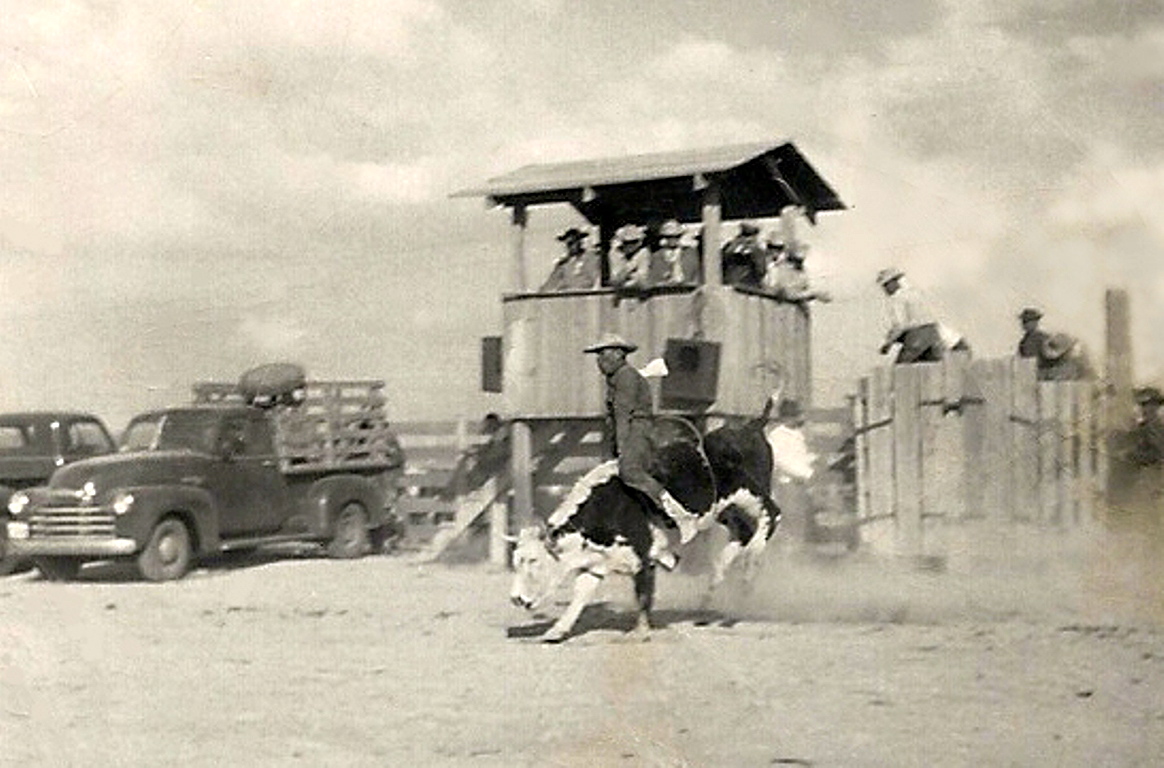
Paul - Bull Riding, Back in the Day


     The Arviso clan from the Crownpiont, New Mexico area has a long and interesting history. For example, Jesus Arviso, whose family came from Spain and then settled in Sonora, Mexico, was once traded for a horse. 
     In the mid-1800s, young Jesus’s family was raided by a band of Apaches; he was taken. Years later the Apache who had Jesus traded him to a Navajo man for a beautiful black stallion. Jesus finished growing up as a Navajo and eventually married into the tribe. As a result of his unique experiences, he now spoke fluent Spanish, Apache and Navajo. Those talents came in handy, as he became a key translator, and important figure, in treaty negotiations between the U.S. Government and the Indians during the 1860s. Two generations later, his grandson, Paul W. Arviso Sr. was instrumental in popularizing the sport of rodeo on the Navajo reservation. 
     Paul was born many miles west of Crownpoint during 1920 into a family of stockmen. His grandfather Jesus had done well serving as an interpreter and was rewarded with much livestock. Paul’s dad was a great stockman and also had been a horseracing jockey. Out with the herd from his earliest memories, this was where young Paul learned about stock. Riding burros and mules while chasing cattle, goats and several thousand head of sheep, made him a superb stockman. Living out on the range as they did, he also grew up tough. He and his brothers even used to ride “Billy” goats and rams around the corrals just for fun. Those corrals were the earliest “arenas” for what was to later become “a legend” of Native American Rodeo. 
     Paul was about fourteen when the family moved closer to town. He was then entered into a boarding school for the first time, making him quite old for a first grader. But even though he did not spend many years in school, he was well educated in livestock and the common sense department. In his later years, he continually speaks at meetings and community events to inspire and motivate young people. He emphasizes the importance of education. “I didn’t have the opportunity for a formal education, but you do, so go after it. Education is valuable and will go a long way,” he advises. 
     It was also 1934 when he discovered rodeo. 
     The group commonly given credit as having the first organized rodeos on the reservation was called the “Rough Riders Rodeo Club Association.” Paul was one of its earliest members. Paul and other members of the club set up bucking chutes, holding corrals and a timed event chute. Then families would come from miles around in wagons and cars, forming a semi-circle to be used as the arena fence. Those old-time rodeos were more than just competitions; they were a celebration, bringing members of the Navajo nation (and eventually other tribes as well) together. It was during this time Paul developed a life-long love of rodeo. 
      Paul dedicated his life to rodeo at a young age and was serious about it. He trained physically and mentally (before that was common) and practiced regularly to hone his already great stockman skills into that of a rodeo cowboy. 
     Paul competed at just about every rodeo you can name across the Southwest and Four-corners region at one time or another. He was a regular All Around Cowboy winner as he competed successfully in most every event including bareback, saddle bronc, bull riding, wild horse racing, wild cow milking, team tying, steer wrestling, calf roping and even an event known as the original chicken pull. For those who have never heard of “the original chicken pull,” it involves uncanny horsemanship skills and daring. To start with, a chicken was buried in the soft sand of the arena with just his head and neck exposed. Riders came down the arena at a full gallop, leaned over and plucked the chicken out of the ground. The fastest time won, and, as you can imagine, it was a big hit with the crowd. 
     As another testament to his all around skills, Paul was both header and heeler in the team tying (later team roping) event and both a “dogger” and hazer in steer wrestling. Sometimes he also worked in the capacity of judge, flagger and even rodeo clown! He did it all when it came to rodeo. Paul says, “Rodeo is more than just a sport, it’s a way of life.” 
     In 1942, Paul was drafted into the U.S. Army and did his duty during World War II. While stationed in Burma, India, a group of guys got together and staged a rodeo as a form of entertainment. Paul entered the bareback and saddle bronc riding…they used pack mules for the rodeo stock. He wound up winning first in both events. His prize money was a box of cigars in one event and a case of beer in the other. Paul laughs and says, “After the show, we really had a party.” 
     Back home, over the next several years, rodeo gained in popularity on the reservation. Then, in 1958, a group of guys decided to form an official association - the All Indian Rodeo Cowboys Association (AIRCA). Paul served as the first vice president. 
     He was actually asked to be the first President of the AIRCA, but declined in favor of letting someone with a little more education take on those duties. He wanted only the best for the association and selflessly put any thoughts of personal gain aside. Paul’s nephew Roy Spencer honorably served as President. 
     During those early years, men such as Paul and his long-time friend, Sonny Jim, (another well-known name in Native American Rodeo) were the ones who showed the world that an Indian could also be a cowboy…and a good one at that. These were the group of men who paved the way for today’s Native American Rodeo Cowboys to become what they have. 
     In a magazine interview for the 4th of July & PRCA Rodeo Celebration at Window Rock, Arizona, Paul once said, “I’m always praying for them to get somebody up there in Las Vegas some of these days.” It was always his dream for the younger generation to compete successfully in the Pro-Rodeo circuit and represent the Indian Nations. 
     Paul did not realize it at the time, but along the way, he became a hero to a whole new generation of guys. Many time Indian National Finals Rodeo qualifier and champion, Lucius Sells, once told the Navajo Times, "I'd like to mention my (grandfather) from Crownpoint, Paul Arviso Sr.. Being around him when he was roping…it's a talent I got. It's just a gift from God that he gave to me. I guess they would say it's in the blood." 
     Just like most of those old-time rodeo cowboys from that generation, Paul was tough. Back in the day, he hauled his horse in the bed of his truck, then later on, in a self-made one-horse trailer. Also, back then most of the roads across the Reservation were not paved, so if it was raining, you were likely to get stuck in the mud on the way to rodeos, then spend several hours digging out. At the rodeo, Paul and his family often camped in tents or outside on the ground, but they had a ton of fun. 
     As he grew older, Paul moved on to competing in “the old-timer’s rodeo association” where he continued his winning ways, adding events like breakaway, ribbon roping and his all-time favorite, steer riding, to his resume. He has fond memories of competing with many men who have “now gone home” - Paul’s words for what most call death. 
     Paul taught his own kids (nine of them) and many other youth the basics of horsemanship and how to care for a horse. One of his own favorite competition horses was named “Rawley.” That horse was an all-around champion as well, being used in many different events during a rodeo. Paul said, “Respect the horse. Take care of your horses and they will take care of you.” 
     In 2003, the Navajo Nation Fair and Rodeo honored Paul by bestowing the title of “Legendary Cowboy” on him. He received a beautiful custom saddle and a plaque for that. Now in his 90s, Paul still enjoys the sport of rodeo as a spectator and is constantly amazed at the talent of the younger generation. He is, in part, responsible for that talent as he served as mentor, inspiration and role model to many of today’s rodeo cowboy. 
     On April 5th, 2012, Paul turns ninety-two! Also, in 2012, he has been nominated for acceptance into the Rodeo Hall of Fame. Many friends and family are pushing for his acceptance and anxiously await the October results. 
     Along with his many memories of competing with some of the all-time great Native cowboys, Paul is especially proud of the fact that the younger generation is now stepping it up a bit and competing “…up there in Las Vegas.” 
     Men like Derrick Begay, Erich Rogers and Spud Jones who now qualify for the Wrangler National Finals Rodeo have the likes of Paul W. Arviso Sr. to thank for exciting the reservation about rodeo and paving the way by letting the world know that the Indian can also be one heck of a cowboy!

Jim Olson © 2012
www.JimOlsonAuthor.com

Now That's RODEO! (1950s)